Pub Quiz
Your complete guide to pub quizzes — what they are, how to play, the best question categories, and how to host your own. Whether you're a regular at your local or planning one at home, this guide has you covered.
✍️ March 25, 2025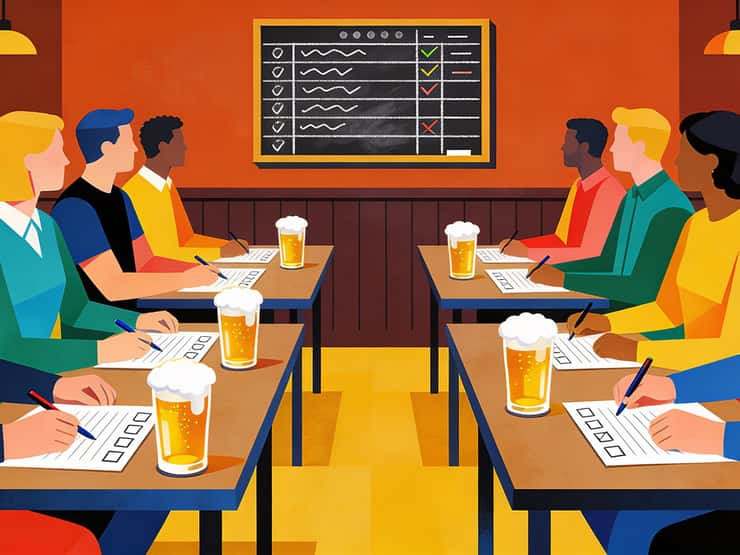
- 🍺 What is a Pub Quiz?
- 📋 How to Play a Pub Quiz
- 📚 Best Pub Quiz Question Categories
- 🎤 How to Host a Pub Quiz
- 💡 Tips for Winning a Pub Quiz
Every week, millions of people gather in pubs, bars, and living rooms around the world to argue about whether the capital of Australia is Sydney or Canberra. (It’s Canberra, by the way.) That’s the magic of the pub quiz — it turns random knowledge into a competitive sport, and it does it over a pint.
The pub quiz is a British institution that’s gone global. What started as a way for pubs to fill seats on quiet weeknights has become one of the most popular social activities on the planet. Whether you’re a trivia enthusiast or someone who just likes the excuse to drink on a Tuesday, there’s a pub quiz out there for you.
What is a Pub Quiz?
A pub quiz is a team-based trivia competition, typically held at a pub or bar, where a quizmaster reads questions and teams compete for the highest score. The format is simple: teams write their answers on paper, hand them in at the end of each round, and the quizmaster tallies the scores. The team with the most correct answers at the end of the night wins — usually a bar tab, a trophy, or bragging rights until next week.
The typical pub quiz runs for about two hours and covers anywhere from 4 to 7 rounds of questions. Each round usually has a different theme or category, though some quizzes throw in a general knowledge round where anything goes.
What separates a pub quiz from just reading trivia questions out loud is the atmosphere. There’s the hushed team huddles, the confident answer that turns out to be spectacularly wrong, the table that erupts when they nail a tough question, and the inevitable argument about whether the quizmaster’s answer is actually correct. It’s competitive, social, and deeply entertaining — even when you’re losing.
How to Play a Pub Quiz
If you’ve never been to a pub quiz before, here’s what to expect. The process is the same whether you’re at a packed London pub or a bar in your hometown.
Before the Quiz
1. Form a team. Most pub quizzes allow teams of 2 to 8 people. You’ll want a mix of knowledge — someone who watches sports, someone who knows geography, someone who pays attention to current events, and ideally someone old enough to answer questions about the 1970s.
2. Pick a team name. This is more important than it sounds. A good team name gets mentioned by the quizmaster all night and sets the tone. Puns work well. Pop culture references work well. Something that makes the quizmaster laugh when they read it out is the gold standard.
3. Arrive early. Popular pub quizzes fill up fast. Arriving 20-30 minutes before start time gets you a good table and lets you settle in with drinks before the first question.
During the Quiz
1. Listen to the quizmaster. They’ll read each question twice (usually). Write your answers on the answer sheet provided. Don’t shout answers out loud — that’s the cardinal sin of pub quizzing.
2. Discuss quietly. The team huddle is sacred. When a question lands, everyone whispers their best guess, and the team decides which answer to go with. This is where the fun really lives — four people absolutely certain of four different answers, all whispering intensely.
3. Hand in your answer sheets. At the end of each round, the quizmaster collects the sheets (or you swap with another team for marking). Scores are tallied and announced between rounds.
4. The joker round. Many pub quizzes let you play a “joker” once during the evening. This doubles the points for that round. Choosing when to play your joker is a strategic decision — you want to use it on a round you’re confident about, but you don’t know what’s coming.
After the Quiz
The quizmaster announces the final scores, usually from bottom to top for maximum tension. The winning team collects their prize, the losing team vows to study harder, and everyone orders another round.
Best Pub Quiz Question Categories
The categories are what give a pub quiz its structure and variety. A good quizmaster mixes broad topics with niche ones and includes at least one round that goes beyond standard Q&A. Here are the most common categories:
General Knowledge
The bread and butter of any pub quiz. Questions from any topic: history, science, geography, language, food — everything is fair game. This is the round where well-rounded teams shine.
Example questions:
- What is the smallest country in the world? (Vatican City)
- How many bones are in the adult human body? (206)
- What year did the Berlin Wall fall? (1989)
For more questions like these, check out our trivia questions collection.
Music
Usually split into “name that tune” (where the quizmaster plays a clip) and written questions about artists, lyrics, and music history. Audio rounds are always the noisiest — half the pub starts singing along, which defeats the purpose but adds to the atmosphere.
Example questions:
- Which band released the album “Abbey Road”? (The Beatles)
- What was Elvis Presley’s first number one hit? (“Heartbreak Hotel”)
- Which artist holds the record for most Grammy wins? (Beyonce)
Film and Television
A crowd favorite, especially when it includes a picture round with screenshots from movies. This category rewards both serious film buffs and people who just watch a lot of Netflix.
Example questions:
- Who directed “Pulp Fiction”? (Quentin Tarantino)
- In “Breaking Bad,” what is Walter White’s alias? (Heisenberg)
- Which film won the first-ever Academy Award for Best Picture? (“Wings,” 1929)
Geography
Maps, capitals, flags, and physical geography. The picture round variant — showing flags or satellite images of countries — is particularly effective. Geography questions have a unique quality: everyone thinks they’re good at geography until they’re asked to name the capital of Myanmar.
Example questions:
- What is the longest river in Africa? (The Nile)
- Which country has the most time zones? (France, with 12)
- What is the capital of Canada? (Ottawa)
Science and Nature
From biology to physics to space. These questions tend to split the room — half the teams ace them, and the other half stares blankly. Including a few accessible questions (like “What planet is closest to the Sun?”) alongside harder ones keeps everyone engaged.
Sport
Football, basketball, Olympics, Formula 1, tennis — the scope depends on your audience. In British pubs, this round is heavily football-focused. In American bars, expect NFL and NBA questions. A good quizmaster reads the room and adjusts accordingly.
Picture Round
A sheet of images where teams identify people, places, logos, or objects. Picture rounds are usually distributed at the start of the quiz so teams can work on them throughout the evening. They add a visual element that breaks up the verbal-only format.
Current Events
Questions about recent news, politics, celebrity gossip, and trending topics. This round rewards people who actually read the news rather than just scrolling headlines. It’s also the round most likely to become outdated, so quizmasters need fresh material each week.
Pop Culture
The intersection of music, film, social media, memes, and celebrity culture. This is where younger teams usually dominate. For a deep dive, see our pop culture trivia collection.
How to Host a Pub Quiz
Want to run your own pub quiz at home, at work, or at your local bar? Hosting a good quiz takes some preparation, but the payoff is worth it. A well-run quiz night becomes a recurring event that people look forward to. For a detailed walkthrough, check out our guide on how to host a trivia night.
Here are the essentials:
Planning the Questions
1. Aim for 40-60 questions total. Split them across 5-7 rounds of 8-10 questions each. This fills about 90 minutes to 2 hours, which is the sweet spot before people start losing focus.
2. Balance the difficulty. Each round should have a mix of easy, medium, and hard questions. Start each round with an easy one to build confidence, put the hardest questions in the middle, and end with a satisfying medium-difficulty closer.
3. Vary the formats. Don’t make every question a straightforward “What is…” question. Mix in multiple choice, true or false, picture rounds, audio rounds, and “nearest wins” numerical questions (like “In what year was the Eiffel Tower completed?”).
4. Double-check your answers. Nothing kills a quizmaster’s credibility faster than a wrong answer. Verify everything with multiple sources. If a question has a debatable answer, either rephrase it or drop it.
Running the Quiz
1. Read questions clearly and twice. Speak slowly, project your voice, and repeat each question. Give teams about 30 seconds to discuss before moving to the next question.
2. Keep the energy up between rounds. Announce scores with commentary. Call out funny team names. Share a random fact between rounds. The quizmaster’s personality is half the entertainment.
3. Handle disputes gracefully. Someone will challenge an answer. It happens every single quiz. Have your sources ready, be willing to accept reasonable alternative answers, and don’t die on the hill of a technicality.
4. Pace the evening. Keep an eye on the clock. If rounds are dragging, cut questions. If teams are flying through, add a bonus round. A quiz that runs over time loses energy fast.
Scoring
1. Keep it simple. One point per correct answer. Half points lead to arguments. Bonus points for specific rounds (like the joker system) add strategy without complexity.
2. Use swap marking. Have teams swap answer sheets with another team for marking. This saves the quizmaster time and adds a layer of accountability. Teams are surprisingly honest when they know someone else is reading their answers.
3. Announce scores after every round. The running leaderboard keeps teams invested. Read from bottom to top if you want to build tension, or top to bottom if you want to keep the pace moving.
For more bar trivia questions and ready-made quiz material, browse our trivia collection.
Tips for Winning a Pub Quiz
Winning a pub quiz isn’t just about knowing things — it’s about strategy and teamwork. Here’s how to give yourself the best shot:
Build a Balanced Team
Cover as many knowledge bases as possible. You want someone strong in sports, someone in science, someone in pop culture, and someone in history. A team of five people who all know about the same topics will get crushed by a team of five people who each know about different things.
Trust the Expert
When someone on your team is confident about an answer and it’s in their area of expertise, go with it. Too many quiz teams lose points because they second-guess the person who actually knows the answer. That said, if nobody’s confident, go with the majority vote.
Don’t Leave Blanks
Guess on every question. A blank is guaranteed zero points. A wild guess has some chance of being right. Even if you have no idea, write something — you’d be surprised how often a shot in the dark lands.
Use the Joker Wisely
If the quiz has a joker system, don’t play it too early. Wait until you see a round that aligns with your team’s strengths. Playing the joker on a music round when your team can’t name a single Beatles song is a waste.
Pay Attention to the Quizmaster
Many quizmasters drop subtle hints in how they phrase questions. If they emphasize a particular word or add “this might surprise you,” they’re telling you the obvious answer is wrong. Listen carefully — the clues are in the delivery.
Have Fun
This is the most important tip and the one most competitive teams forget. Pub quizzes are social events first and competitions second. The team having the best time usually plays the best anyway — stress and overthinking are the enemies of good trivia recall.
The pub quiz has survived decades because it does something no app or streaming service can replicate: it brings people together in a room, gives them a shared challenge, and lets them bond over both knowledge and ignorance. Whether you’re crushing it or finishing dead last, you’re still having a better Tuesday night than everyone sitting at home.
For more trivia content, explore our trivia questions, bar trivia questions, and pop culture trivia collections. And if you’re ready to take the leap from player to host, our how to host a trivia night guide will walk you through every step.
Frequently Asked Questions
What is a pub quiz?
A pub quiz is a trivia competition held at a bar, pub, or social venue. Teams of 2-8 people answer questions across multiple rounds and categories. A quizmaster reads the questions, teams write their answers, and the team with the most correct answers wins.
How many rounds does a pub quiz have?
A standard pub quiz has 4-7 rounds with 5-10 questions each. Rounds usually cover different categories like general knowledge, music, geography, science, and a picture or audio round. The whole event typically lasts 1.5 to 2.5 hours.
How do you host a pub quiz at home?
Prepare 40-60 questions across 5-6 rounds. Print answer sheets, set up a scoring system, and designate a quizmaster. Add variety with picture rounds, music rounds, and a joker system. Serve food and drinks to recreate the pub atmosphere.
What makes a good pub quiz question?
A good pub quiz question is challenging but not impossible. The best questions make teams debate among themselves — someone thinks they know the answer but isn't sure. Avoid questions that are either too obvious or so obscure that nobody could reasonably know them.
How big should pub quiz teams be?
The ideal team size is 3-6 people. Smaller teams mean everyone contributes, while larger teams cover more knowledge areas. Most pub quizzes cap teams at 6-8 to keep things competitive. Two-person teams can work but are at a disadvantage against bigger groups.